Waste heat recovery in power plants and Oil&Gas industry

Recovering exhaust heat from gas turbines and internal combustion engines is an effective way to optimise efficiency and performance, while reducing the environmental impact of power generation plants commonly used for processing and refining in the Oil & Gas sector, data centers, as well as electricity production stations. Waste heat recovery systems that repurpose this waste heat by converting it into clean electricity are the key technology to achieve this goal.

ORC heat recovery Oil Gas

MAPPING THE PATH TO A SUSTAINABLE FUTURE THROUGH WASTE HEAT RECOVERY

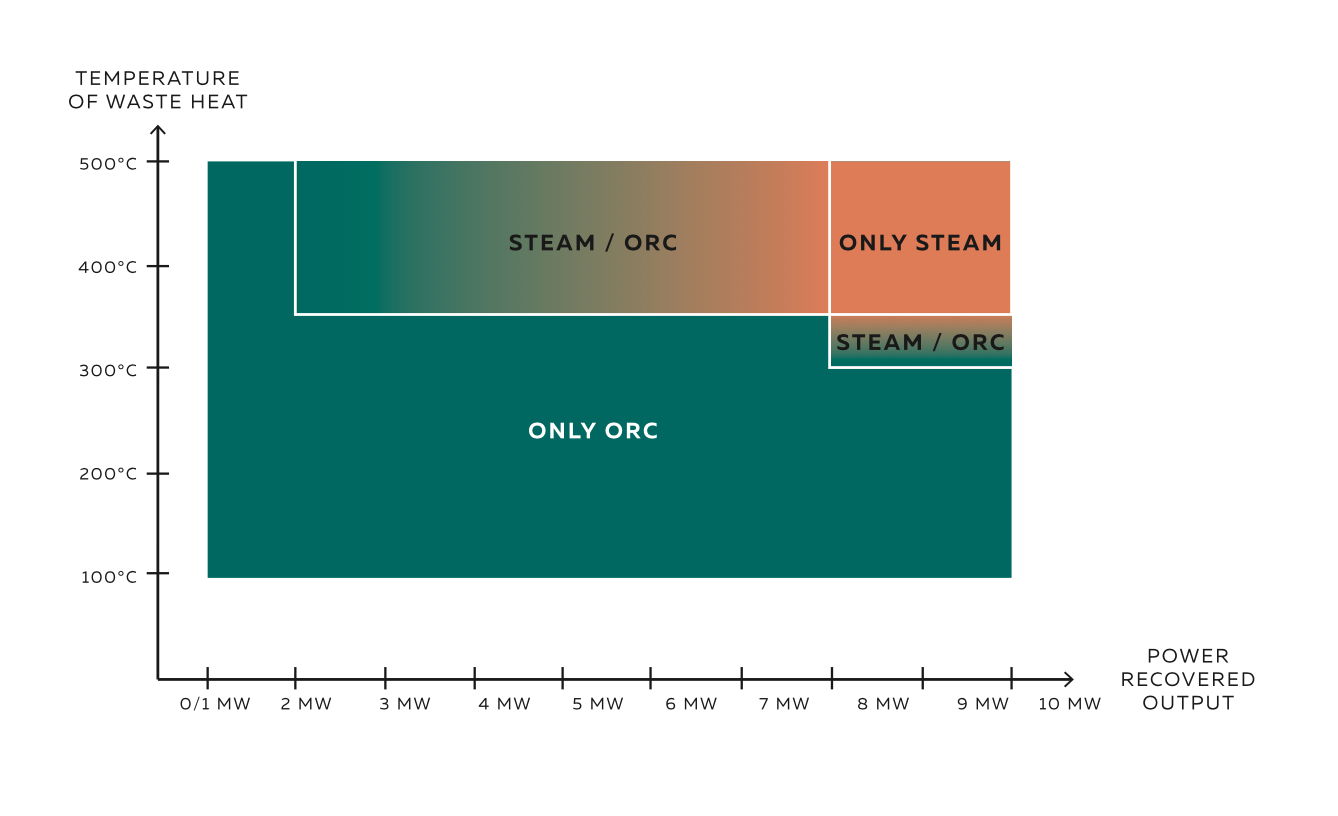
ORC vs. Steam Rankine Cycle for Waste Heat Recovery: How to Choose?

When it comes to available technologies to recover waste heat from these sources, the market offers two commercial solutions: steam technologies and Organic Rankine Cycle systems.

Waste Heat Recovery plants employing steam offer advantages in terms of both efficiency and security for plant operation but lack flexibility and require more maintenance compared to ORCs.

The Organic Rankine Cycle (ORC) offers the advantages of higher flexibility, as well as less and simpler maintenance, making it the preferred choice for exhaust gas heat recovery from both engines and gas turbines in the low-medium size range. 

Why choose an ORC system for exhaust heat recovery from turbines and engines?

Advantages of ORC Waste Heat Recovery Systems vs Steam Rankine Cycle:

Exergy's ORC applications for Waste Heat Recovery from turbines

Exergy ORC waste heat recovery systems employing the Radial Outflow Turbine offer high efficiency for modern low temperature turbines, in addition to all the advantages of ORC vs steam.


APPLICATIONS
INTERNAL COMBUSTION ENGINES AND GAS TURBINES
DATA CENTERS
GAS COMPRESSOR STATIONS
LNG REGASIFICATION PLANTS
OTHER HOT STREAM PROCESSING IN OIL & GAS
Radial Outflow Turbine LNG application

Waste Heat Recovery for Data Centers

The rapid expansion of data centers, accelerated by artificial intelligence, is driving a sharp increase in electricity demand and placing growing pressure on the grid. Data center operators are turning to gas turbines/engines for onsite generation—systems that, however, release large amounts of waste heat that typically remain unutilized.

Exergy’s ORC solutions enable the recovery of this wasted thermal energy and its conversion into additional onsite electricity, boosting overall efficiency and reducing the cost of power generation in data center. Exergy can supply either the standalone ORC module or a fully integrated package including the heat exchanger and the thermal oil intermediate loop for a turnkey heat recovery solution.

A single ORC module can deliver up to 30–40% additional carbon-free electrical output from gas turbine waste heat, operating continuously, with no water consumption and fully automated operation, ensuring a reliable onsite power generation.

EXAMPLE of ORC performance and payback time from 3 gas turbines mod. Solar Titan 130 | Operational load 100% | Fuel: natural gas

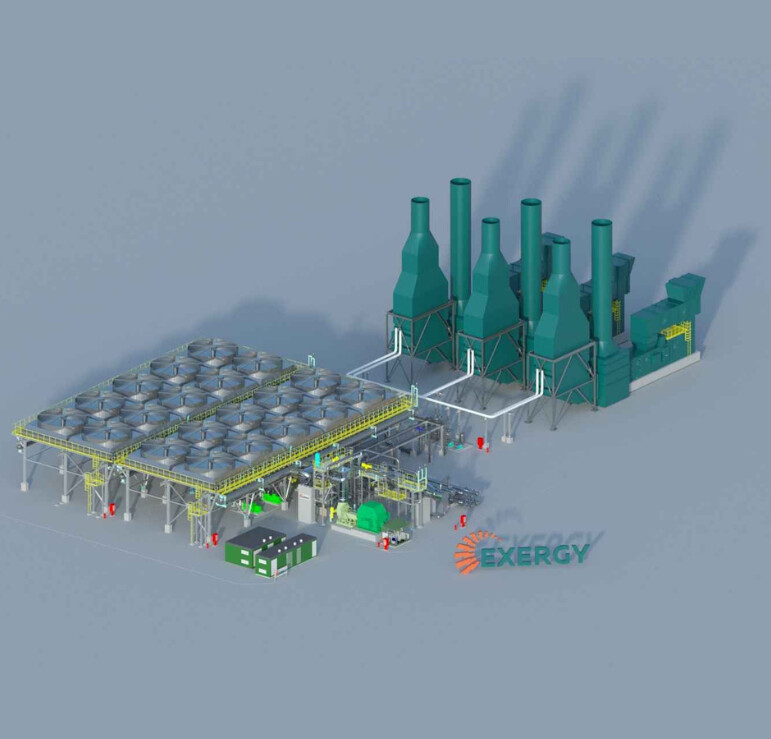
202.680 kg/HR504 °C181 °C60 MWth15 MWE3 YEARS
EXHAUST GAS MASS FLOW RATE (EACH TURBINE)EXHAUST GAS TEMPERATUREWHR OUTLET EXHAUST GAS TEMPERATURERECOVERED THERMAL POWER (TOTAL)GENERATED POWERPAYBACK TIME

EXERGY’s ORC power plants range between 1 MW to 20 MWe for a single unit.

Want to Know How Our Waste Heat Recovery Systems Can Improve the Efficiency and Sustainability of Your Processes?

PORTFOLIO

6 MWe

PLANTS

10

TOE/Y SAVED

9100

TONNES CO2 EMISSION/Y SAVED

17800
How Waste Heat Recovery cycle from gas turbine or engine works

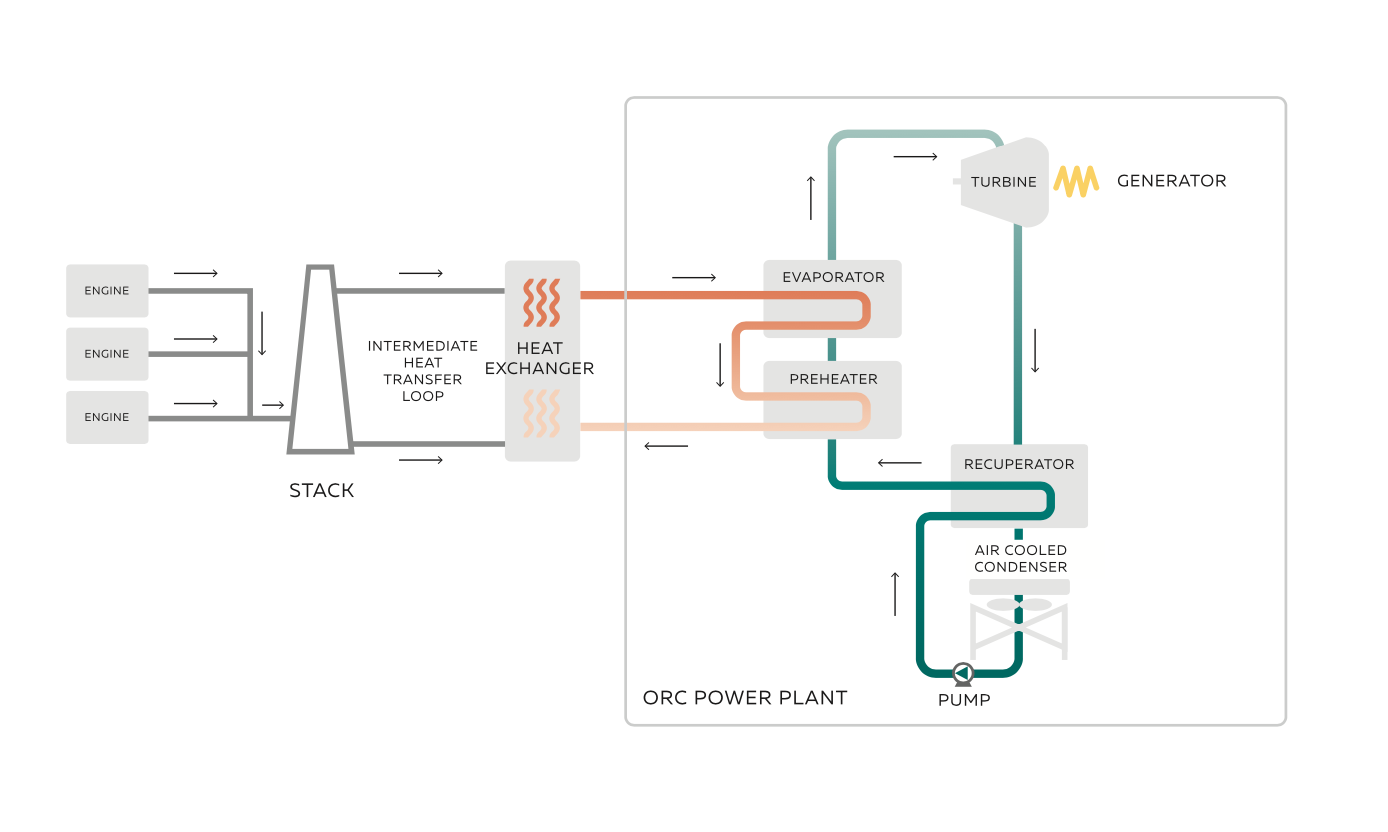
The heat recovery system extracts thermal power from the exhaust of engines or turbines to feed the ORC module via an intermediate loop of heat recovery. The intermediate fluid, usually oil, transfers heat to the organic fluid in the ORC evaporator, where it vaporizes. The vaporized fluid then flows to the turbine. Here, the vapor expands, causing the turbine to spin and creating electricity in the generator.

The vaporized organic fluid then continues through the cycle to the condenser where it transforms into liquid, ready to be processed by the pump before beginning the cycle again.